My Strategy
My Philosophy
Built for Consistency, Backed by Discipline
It’s designed to help you grow your account steadily while absorbing the occasional loss without emotional stress.
If you ever feel stressed, reactive, or find yourself revenge trading or panic selling, pause and return to this page. These algos are powerful — but only when used with structure and discipline.
Simple. Scalable. Structured.
My 4-Step Trading System

Step 1
Divide your trading account by 20. This gives you a defined risk per trade which is equal to 5% of your total equity. For example, if you’re starting with $10,000, then each trade is capped at $500. That gives you 20 total trades per week, or up to 4 trades per day. If one trade loses, you’re only down 1/20th of your account — a manageable hit that’s easy to recover from with wins from other tickers. Some traders prefer to use a higher percentage of their equity; its all up to you and your risk tolerance.

Step 2
Choose your 4 trades per day. With 12 total algos, and most printing daily signals, selecting 4 quality trades is simple. You can trade more if you’d like; I typically aim for 4-6 trades but this overview is based on 4 per day.
Step 3
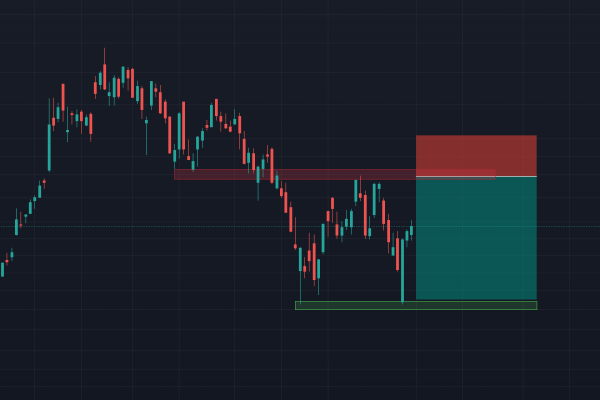
Set profit targets. Let’s say one contract costs $500 and your target is 6%. That means you’ll add 6% to 500 which is 530. Set a limit sell order for $530. Once the contract value reaches 5.30 the sell order will automatically execute. If you repeat this process for 4 trades, you’ve invested $2,000 and could profit $120 in a day. Do that five days in a row and you’ve earned $600 for the week — now your account is $10,600. Keep in mind this is an illustrative overview. Contract pricing, order fills, market conditions etc., will not look as clean and straightforward as this example. This is just to show you the mechanics on how my system functions.
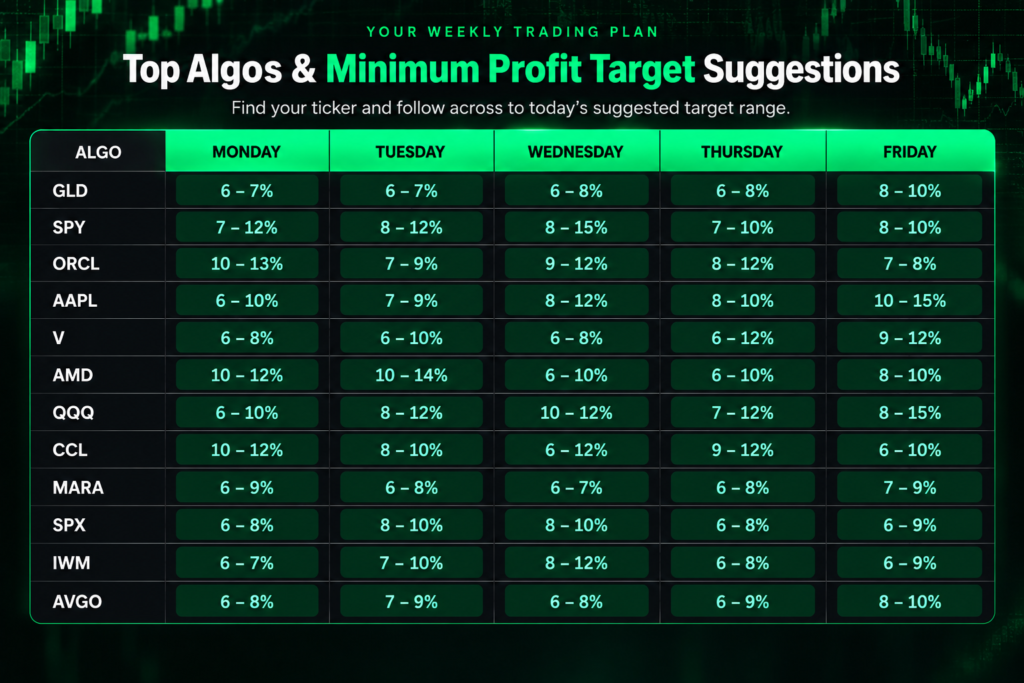
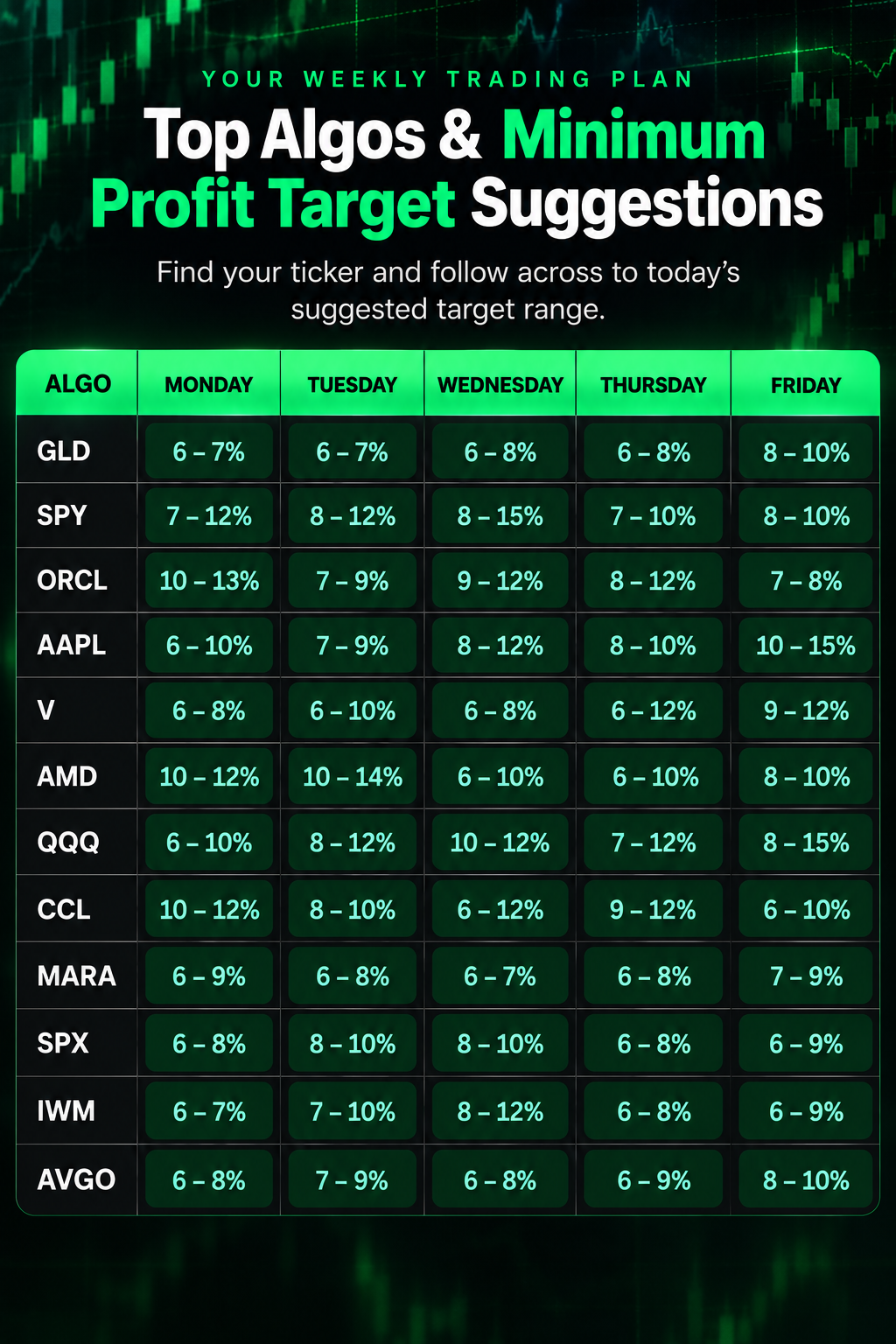
Many of these breakout trades offer considerably higher upside than the minimum take profit suggestions with runners and trailing stops. Managing runners is further explained in the video library on this site. All suggested minimum profit targets are shown below at the bottom of this page.

Step 4
Compound your account. The following week, divide your new account balance by 20 again to determine your allocation per trade. That means each trade is now approximately $530 instead of $500. By the end of the second week, your account could grow to $11,236, assuming your projected returns are achieved.
Now imagine repeating that process week after week. As your account grows, so does the amount you can allocate to each trade, allowing your profits to compound much bigger over time.
Of course, trading isn’t always going to go according to plan. Longer expiration dates, open drawdowns, occasional losing trades, and changing market conditions can all affect your ability to compound consistently. Some weeks you’ll grow your account by quite a bit, some weeks you’ll need to hold steady, and others you may experience temporary losses. Losing trades are an unavoidable part of trading. The purpose of this approach is to manage exposure, limit the impact of individual losses, and give your account room to grow over time.
The goal isn’t to force growth every single week. It’s to build your account responsibly, protect your capital, and let compounding work in your favor when opportunities allow.
Small, consistent gains can add up over time. You don’t need to hit a home run on every trade. You need a repeatable strategy, disciplined risk management, and the patience to let your money work for you.
What About Losing Trades?
- 1 trade loses → You’re still up $100 for the week.
- 2 trades lose → You’re down $400, with an account now at $9,600.
Advanced Technique
How to Boost Gains While Minimizing Risk
- Sell one at 6% for a quick profit.
- Keep the other as a “runner” with more upside potential.

Scaling the Same Trade
How to Maximize Profit with Multiple Contracts
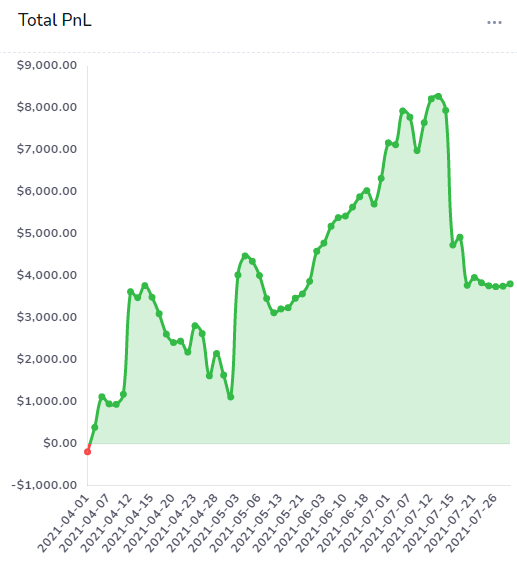
- Sell 2 at 6%
- Sell 1 more at 15%
- Sell another at 25%
- Let the final contract run or cut it if a reversal occurs